The body benefits from movement, the mind benefits from stillness
Somatic Healing
Can you imagine standing at the head of a vast, beautiful river network that branches away for miles in every direction. As you stand there you are taking in the magnificence of its beauty – how intertwined and in-sync the whole system is, everything flowing smoothly, almost with purpose and direction. Now, whilst standing at the head of this river you notice a huge dumper truck backing up to the bank of the river head, and try as you might it just keeps coming until it eventually drops its contents in this once tranquil source of life. No matter how strong a swimmer you are, how quickly you can begin to scoop pieces out, or how resourceful you are to build a blockade, the likelihood is that some of these contents will begin to make its way downstream and start to have an impact on the rest of this once serene network of life and vitality.
 Photo Credit: https://conservationcorridor.org
Now, if you haven’t figured it out already, this river network and dumper truck is a metaphor for how negativity and life crisis can have a downstream impact on our nervous system by triggering responses within the mind. With its two divisions comprised of somatic and autonomic nervous systems, there is a complex chain of reactions that begin in the brain and continue under the surface which ultimately leaves its mark on the rest of the body. You may be a heavyweight champion of mindfulness with an ability to remain still and balanced amongst a monsoon of life’s travesties – yet, as coined by Bessel van der Kolk – ‘the body will keep the score’. Those who have been exposed to trauma and neglect from a young age will have an over-active hypervigilant response which also keeps the body in a constant state of arousal and preparedness, and the result of this can manifest as weaker immune systems, along with dysregulated heart rate and heart rate variability.
As the dumper truck of of life brings its load of trash into your life, you will inevitably experience the firing up of your brain’s limbic system. This is the region of our brain that developed earliest in our evolutionary history, with some basic but vital objectives; to eat, to mate, and most importantly, to survive. When this survival instinct kicks-in, your Amygdala perceives a threatening situation through one of your five senses, then it relays the message to your Hippocampus for memory, and then onto your Hypothalamus so that your body can prepare for fight or flight through hormone and cortisol secretion – and this is where the body begins to keep the score.
Whilst these may be normal responses, and very useful in genuinely threatening situations, problems can arise when we are unable to effectively reduce our arousal levels. In some cases we may even generate the threats ourselves through anxiety, rumination, or catastrophising benign situations. Our bodies become drenched in hormones that are not needed, secreted from the pituitary gland of the brain for fight/flight responses, yet floating downstream into the body with nowhere to go, or reason for being there and ultimately causing the body harm rather than good.
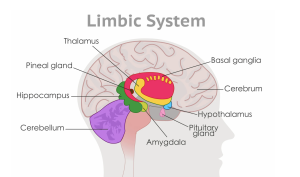 Picture Credit: https://www.simplypsychology.org/limbic-system.html
So, thinking back to the river system, this dumper truck is unfortunately part of ourselves – the limbic system. Whilst the dumper truck may play an important role at times, it can also send things into the system when they are not needed; effectively causing a backlog of bio-chemicals that have nowhere to be used, yet they must be processed. These hormones and bio-chemicals can be lingering in our nervous system, along with other places and begin to cause a knock-on effect, creating damage to the surrounding cells and systems whilst they wait to be processed.
In his book, The Body Keeps the Score, Bessel van der Kolk emphasises the inextricable link between the mind and body, particularly in the context of trauma. He argues that trauma is stored not just in the mind, but in the body itself, and that healing must therefore involve physical engagement. A key quote from the book that highlights the role of movement and bodily awareness in healing is:
“Once you start approaching your body with curiosity rather than with fear, everything shifts.”
This quote underscores the idea that for many people, especially those with a history of trauma, the body can feel like an unsafe place. Van der Kolk advocates for therapies that help individuals reconnect with their physical sensations in a safe and supportive manner, such as yoga or tai chi, to help them regain a sense of ownership over their bodies and move toward healing. This healing happens as the movement and somatic exercises encourage metabolisation and regeneration of cells, which includes the nervous system that reaches into every corner of our being. Then, they begin to replace the stress hormones associated with the sympathetic nervous system with the four happy hormones associated with the parasympathetic nervous system. Something as simple as a walk each day in the woods or other place of natural beauty can kick-start your physical and mental healing through somatic movements. When you add in the additional benefits of things such as Forest Bathing, and Grounding Barefoot, the benefits of using nature as medicine becomes even more effective.
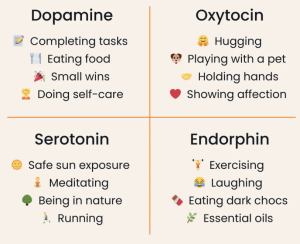 Photo Credit: https://www.funkyfatfoods.com
Beyond the chemical response, movement helps in other crucial ways:
- Stress and Anxiety Reduction: Physical activity helps lower levels of cortisol, the primary stress hormone. It also helps to regulate the nervous system, calming the “fight-or-flight” response, which is often overactive in people experiencing anxiety.
- Improved Self-Esteem and Confidence: Setting and achieving small goals related to physical activity can boost a person’s self-confidence and self-worth.
- Better Sleep: Regular exercise is proven to improve sleep quality, and since sleep is directly linked to mood regulation, this has a profound positive effect on mental health.
- Social Connection: Participating in group activities, such as team sports or a walking club, can combat feelings of loneliness and provide opportunities for social interaction, which is a key component of well-being.
Sometimes, when we are being compressed by life, the last thing we may feel like doing is getting out the house and completing some exercise. Whilst rest is essential during stressful periods, movement and engagement is paramount to the overall healing process, for without somatic movements the hormones that are backlogging in our nervous system will remain dormant and damaging to the rest of the body. We must rest when necessary, however, any opportunity we get to complete some exercise – no matter how insignificant it may feel, we must complete the task and contribute to our greater healing.
I would highly recommend further reading on this subject for those who are interested by purchasing the book ‘The Body Keeps The Score‘. This is an in-depth look at how trauma diagnosis were refined, along with its symptoms and pathophysiology, so that proper and effective treatments could be procured.
Find out more and purchase here: Bessel van der Kolk